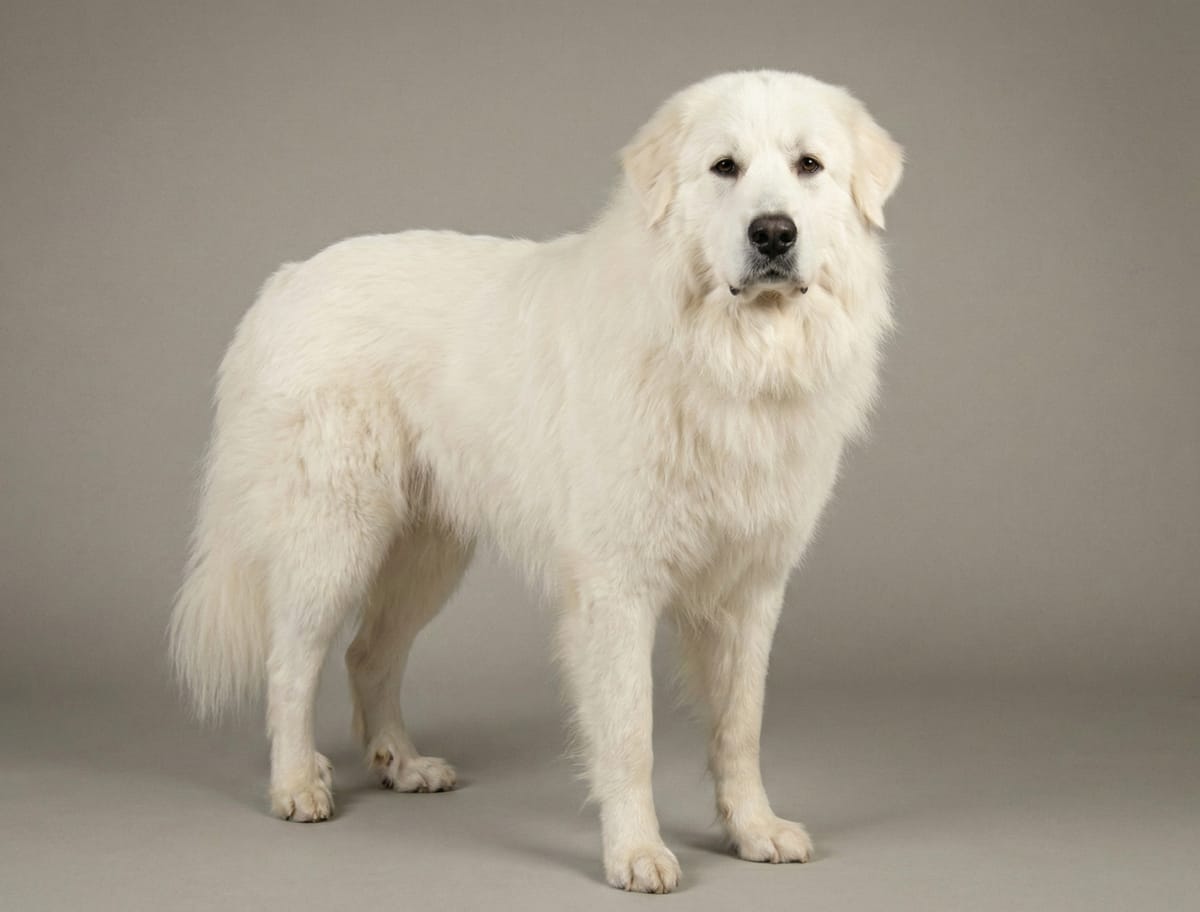
How Much to Feed a Great Pyrenees
By PetEssentialist Team · Updated June 2026 · How we review
We independently research and pick every product. When you buy through our links we may earn a commission, at no extra cost to you. How this works.
Feeding a Great Pyrenees requires careful consideration of their giant size, thick double coat, and low energy level. A typical Great Pyrenees weighs between 85-120 pounds and needs a diet that supports their large frame without overfeeding, which can exacerbate common health issues like hip dysplasia and bloat. Their calm and gentle nature means they may not always indicate hunger or fullness, so owners must monitor their intake closely. Great Pyrenees are prone to overheating in summer due to their thick coat, so their diet should be adjusted accordingly to prevent heat sensitivity. A balanced diet that meets their nutritional needs is crucial to maintain their overall health and well-being. Their moderate grooming needs and high shedding also require attention to prevent matting and tangling of their coat. Understanding the specific feeding needs of Great Pyrenees is essential to ensure they receive the right amount of nutrients to thrive, and owners can consult our product picks for guidance on the best food and feeding accessories for their dog.
What to look for
Determine Your Great Pyrenees' Ideal Weight
To determine how much to feed your Great Pyrenees, first, establish their ideal weight range, which is typically between 85-120 pounds. Consult with your veterinarian to determine the ideal weight for your dog based on their age, size, and body condition. This will help you calculate the right amount of food to feed them.
Calculate Daily Caloric Needs
Great Pyrenees are giant dogs with low energy levels, so their daily caloric needs are relatively low compared to more active breeds. A general rule of thumb is to feed 2-3% of their body weight per day, divided into 2-3 meals. For example, a 100-pound Great Pyrenees would need around 2-3 pounds of food per day.
Adjust for Age and Activity Level
Puppies, seniors, and more active Great Pyrenees may require adjustments to their diet. Puppies need more calories to support growth, while seniors may need fewer calories to prevent weight gain. More active Great Pyrenees, such as those used for guarding or hiking, may require more calories to support their energy needs.
Monitor and Adjust
Regularly monitor your Great Pyrenees' weight, body condition, and overall health, and adjust their diet as needed. Be cautious not to overfeed, as this can lead to obesity and related health issues. Consult with your veterinarian if you're unsure about your dog's diet or if you notice any changes in their health or weight.
Consider Seasonal Adjustments
Great Pyrenees may require adjustments to their diet during extreme weather conditions, such as summer heat or winter cold. In summer, they may need more water and a cooler, more easily digestible diet to prevent heat sensitivity. In winter, they may need more calories to stay warm.
Frequently asked questions
How often should I feed my Great Pyrenees?
Great Pyrenees should be fed 2-3 times a day, depending on their age, size, and activity level. Puppies may require more frequent feeding, while seniors may require less frequent feeding.
What type of food is best for Great Pyrenees?
Great Pyrenees require a balanced diet that meets their nutritional needs, with a focus on high-quality protein sources, whole grains, and moderate fat content. Consult with your veterinarian to determine the best food for your dog based on their age, size, and health status.
Can I free-feed my Great Pyrenees?
No, it's not recommended to free-feed Great Pyrenees, as they can easily become overweight or obese. Instead, feed them measured portions at set times to maintain a healthy weight and prevent overeating.
How can I prevent my Great Pyrenees from overheating in summer?
To prevent overheating, provide your Great Pyrenees with plenty of cool water, shade, and a cooler, more easily digestible diet. Avoid exercising them during the hottest part of the day, and consider providing a cooling vest or pad to help keep them cool.
What are the signs of overfeeding or underfeeding my Great Pyrenees?
Signs of overfeeding include weight gain, lethargy, and digestive issues, while signs of underfeeding include weight loss, lethargy, and poor coat condition. Consult with your veterinarian if you're unsure about your dog's diet or if you notice any changes in their health or weight.
Feeding a Great Pyrenees requires careful attention to their unique needs, including their giant size, thick coat, and low energy level. By determining their ideal weight, calculating daily caloric needs, and adjusting for age and activity level, owners can provide their dog with a balanced diet that supports their overall health and well-being. Consult with your veterinarian to determine the best feeding plan for your Great Pyrenees.
More for your Great Pyrenees
Other breed-matched picks worth a look.