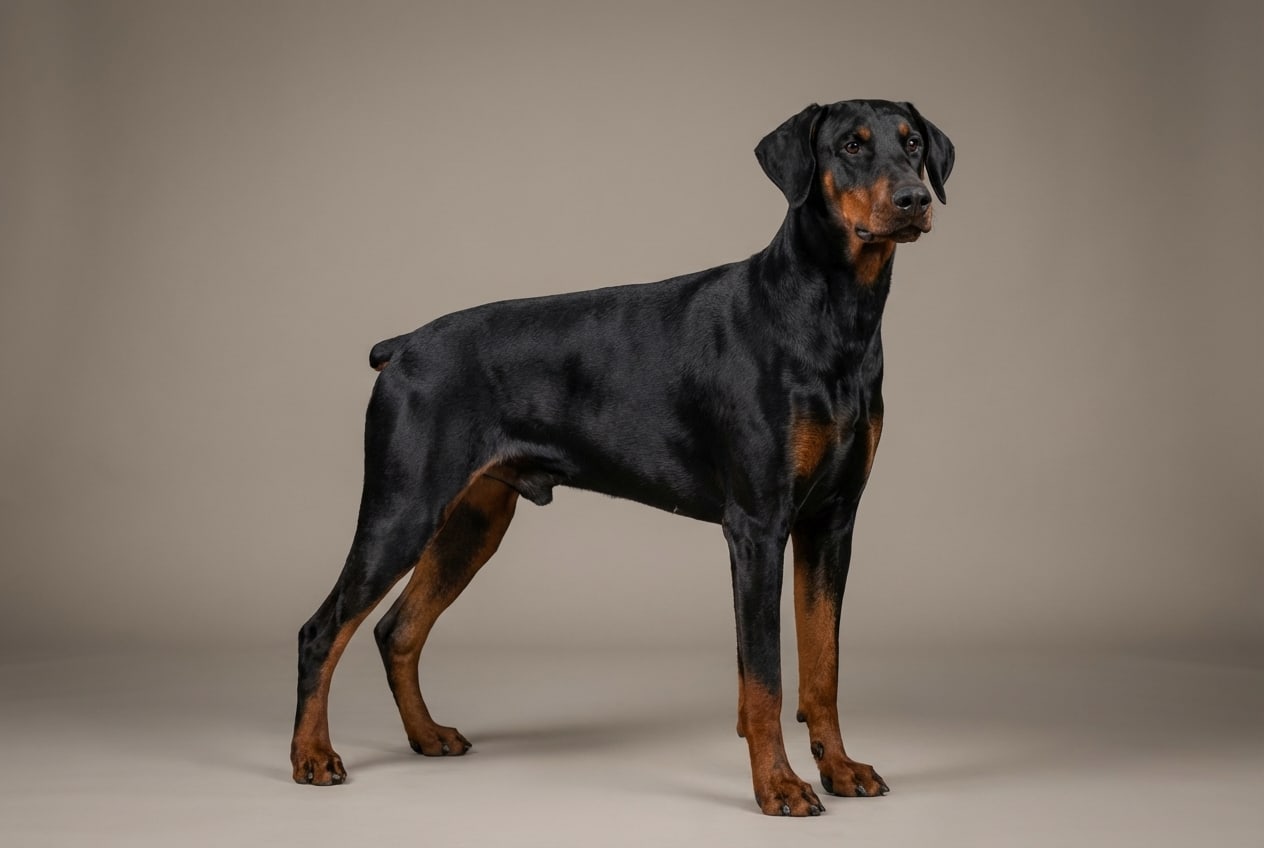
Is a Doberman Pinscher the Right Dog for You?
By PetEssentialist Team · Updated June 2026 · How we review
We independently research and pick every product. When you buy through our links we may earn a commission, at no extra cost to you. How this works.
A Doberman Pinscher's large size, high energy level, and short single coat require a dedicated owner who can provide regular exercise and protect them from cold temperatures. Their loyal and intelligent nature makes them a great companion, but also demands consistent training and socialization. With a lifespan of 10-12 years, owning a Doberman Pinscher is a long-term commitment that requires careful consideration of their needs, including potential health issues like heart problems and bloat.
What to look for
Space and Exercise
Doberman Pinschers need ample space to move around and exercise regularly, requiring at least one hour of physical activity per day. A large, securely fenced yard is ideal, but regular walks and playtime can suffice in smaller spaces. Their high energy level means they're not suited for sedentary owners.
Grooming and Health
Despite their short coat, Doberman Pinschers shed moderately and require occasional grooming. Their deep chest and lean build make them prone to bloat and cold sensitivity, so owners must be aware of these potential health issues and take preventative measures.
Training and Socialization
Intelligent and loyal, Doberman Pinschers thrive on consistent training and socialization. Early socialization is crucial to develop good behavior and prevent fear-based aggression. Positive reinforcement training methods are recommended to bring out the best in this breed.
Family and Apartment Suitability
Doberman Pinschers can make great family pets, but their large size and high energy level mean they're not ideal for small apartments or families with very young children. They require a stable, calm environment and may not tolerate rough play or loud noises.
Cost and Commitment
Owning a Doberman Pinscher is a significant financial commitment, with potential costs including regular veterinary care, high-quality food, and preventative measures against common health issues. Owners must be prepared to dedicate time and resources to their dog's well-being for the next 10-12 years.
Frequently asked questions
Are Doberman Pinschers good with children?
Doberman Pinschers can make great family pets, but their large size and high energy level mean they're not ideal for families with very young children. They require a stable, calm environment and may not tolerate rough play or loud noises.
Do Doberman Pinschers shed a lot?
Despite their short coat, Doberman Pinschers shed moderately, requiring occasional grooming to prevent loose hair from accumulating.
Can Doberman Pinschers live in apartments?
While it's possible to keep a Doberman Pinscher in an apartment, their large size and high energy level mean they require regular exercise and space to move around. A large, securely fenced yard is ideal, but regular walks and playtime can suffice in smaller spaces.
Are Doberman Pinschers prone to health issues?
Yes, Doberman Pinschers are prone to certain health issues, including heart problems, bloat, and hip dysplasia. Regular veterinary care and preventative measures can help mitigate these risks.
How much exercise does a Doberman Pinscher need?
Doberman Pinschers require at least one hour of physical activity per day, including walks, playtime, and training sessions. Their high energy level means they're not suited for sedentary owners.
For active owners who can provide regular exercise, training, and attention, a Doberman Pinscher can be a loving and loyal companion. Their specific needs, including space, grooming, and health considerations, must be carefully weighed before deciding to bring one home. With the right owner, a Doberman Pinscher can thrive and become a beloved member of the family.
More for your Doberman Pinscher
Other breed-matched picks worth a look.