Bull Terrier
The Bull Terrier is a medium dog known for being playful, mischievous, loyal.
- Size
- medium
- Weight
- 50–70 lbs
- Life span
- 11–13 yrs
- Coat
- short flat
- Shedding
- moderate
- Energy
- high
Health to watch for
Common breed predispositions — not a diagnosis. Always consult your vet.
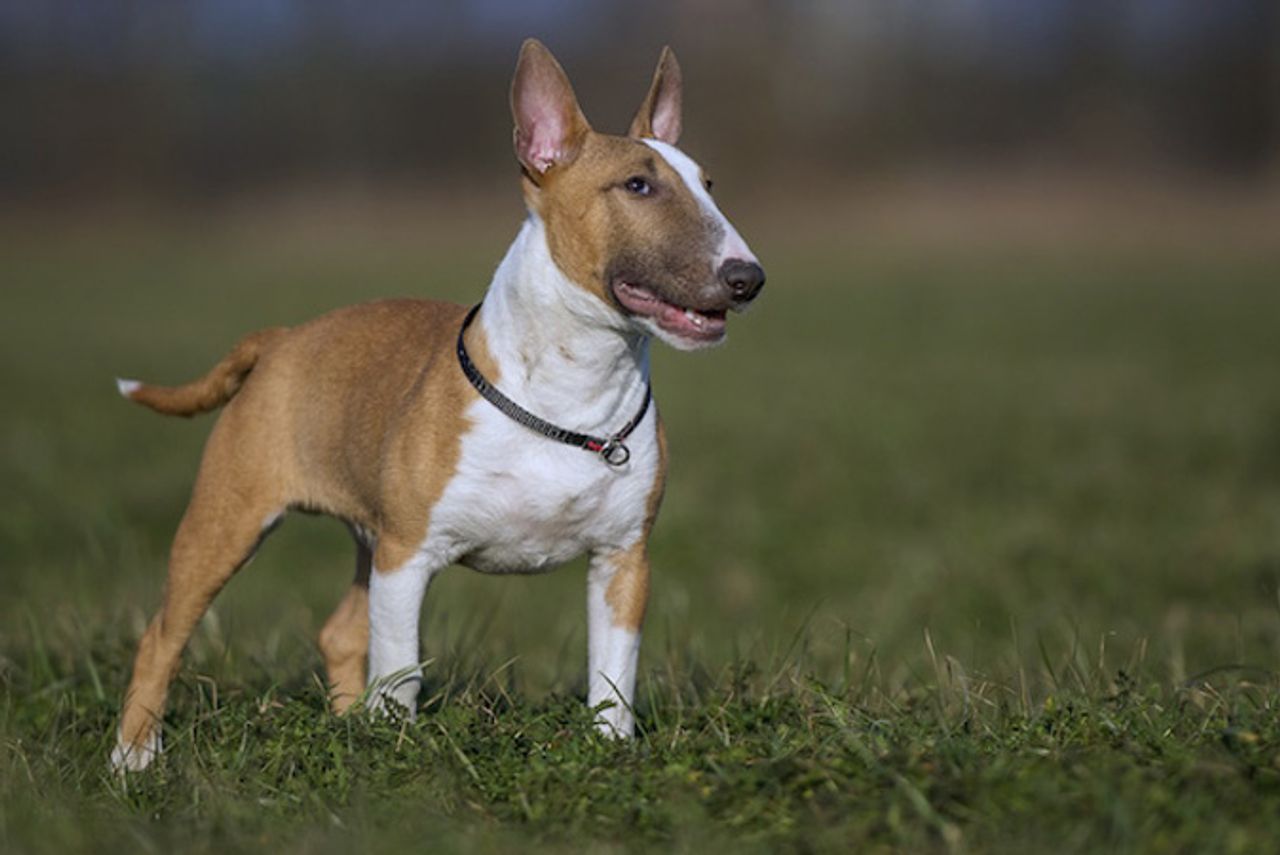
A Bull Terrier's day often begins with a burst of energetic play, their muscular build and egg-shaped head a testament to their lively nature. As the morning unfolds, their loyal and affectionate side takes over, seeking attention and interaction from their family. However, beneath their playful clown exterior, Bull Terriers require careful consideration of their health, grooming, and exercise needs to thrive.
With a short, flat coat that sheds moderately, Bull Terriers are relatively low-maintenance in terms of grooming. Yet, their high energy level demands regular exercise and mental stimulation to prevent boredom and destructive behavior. As a breed prone to deafness, kidney disease, and skin allergies, owners must be vigilant about monitoring their health and seeking veterinary care when needed.
As a medium-sized breed weighing between 50-70 pounds, Bull Terriers are well-suited to active families with ample space to run around. Their life expectancy of 11-13 years means that owners are making a long-term commitment to caring for these loyal and loving companions.
Temperament & Training
Bull Terriers are known for their playful, mischievous, and loyal nature, making them a great fit for families with children. However, their strong will and energetic personality require consistent training and socialization from an early age. Positive reinforcement techniques and plenty of exercise can help channel their energy and prevent destructive behavior. Early training is crucial to develop good habits and prevent unwanted behaviors.
Daily Care & Grooming
Despite their short coat, Bull Terriers still require regular grooming to remove loose hair and distribute skin oils. A weekly brushing and occasional bath can help keep their coat healthy and shiny. Additionally, their egg-shaped head and muscular build require regular cleaning and maintenance to prevent skin fold dermatitis and other health issues.
Exercise & Enrichment
Bull Terriers need plenty of physical and mental stimulation to prevent boredom and destructive behavior. Regular walks, playtime, and interactive toys can help keep them engaged and active. High-energy activities like running, agility training, and playtime in securely fenced areas are ideal for this breed. Mental stimulation through puzzle toys and scent work can also help prevent boredom and stress.
Feeding Considerations
As a medium-sized breed, Bull Terriers require a balanced diet that meets their nutritional needs. High-quality dog food with moderate protein and fat content can help support their energetic lifestyle. However, their propensity for kidney disease and skin allergies means that owners should be mindful of their food choices and consult with their veterinarian to determine the best diet for their individual dog.
Cost & Commitment
Owning a Bull Terrier comes with significant financial and time commitments. Regular veterinary care, high-quality food, and supplies can cost upwards of $1,000 per year. Additionally, their high energy level and training needs require a significant investment of time and effort. Owners should be prepared to commit to regular exercise, training, and socialization to ensure their Bull Terrier leads a happy and healthy life.
Bull Terrier FAQ
How often should I exercise my Bull Terrier?
Bull Terriers require at least 30 minutes of exercise per day, including walks, playtime, and high-energy activities like running or agility training. They also need regular mental stimulation through interactive toys and scent work to prevent boredom and stress.
Can Bull Terriers be left alone for long periods?
Bull Terriers are social dogs that thrive on interaction and attention from their family. Leaving them alone for long periods can lead to destructive behavior, anxiety, and stress. It's recommended to provide regular breaks and exercise during the day, or consider hiring a dog walker or asking a friend to check in on them.
How can I prevent skin allergies in my Bull Terrier?
Bull Terriers are prone to skin allergies, which can be managed through regular grooming, a balanced diet, and avoiding exposure to common allergens like pollen and dust. Consult with your veterinarian to determine the best course of action for your individual dog, and consider using hypoallergenic shampoos and conditioners to soothe and calm their skin.
Are Bull Terriers good with children?
Bull Terriers are known for their loyal and affectionate nature, making them a great fit for families with children. However, as with any breed, it's essential to socialize them well and teach children how to interact with dogs safely and respectfully. With proper training and supervision, Bull Terriers can make wonderful family pets.
How long do Bull Terriers typically live?
Bull Terriers have an average life expectancy of 11-13 years, depending on factors like diet, exercise, and health conditions. With proper care and attention, many Bull Terriers live well into their teens, making them a long-term companion for their owners.
Top picks for Bull Terriers
- Best Brushes for Bull Terriers →
- Best Dental Chews for Bull Terriers →
- Best Crates for Bull Terriers →
- Best Collars for Bull Terriers →
- Best Treats for Bull Terriers →
- Best Food for Bull Terriers →
- Best Harnesses for Bull Terriers →
- Best Leashes for Bull Terriers →
- Best Chew Toys for Bull Terriers →
- Best Nail Clippers for Bull Terriers →
- Best Shampoo for Bull Terriers →
- Best Joint Supplements for Bull Terriers →
- Best Toys for Bull Terriers →
- Best Beds for Bull Terriers →
- Best Jackets & Coats for Bull Terriers →
- Best Cooling Mats for Bull Terriers →
- Best Training Pads for Bull Terriers →
- Best Ear Cleaners for Bull Terriers →