Dachshund
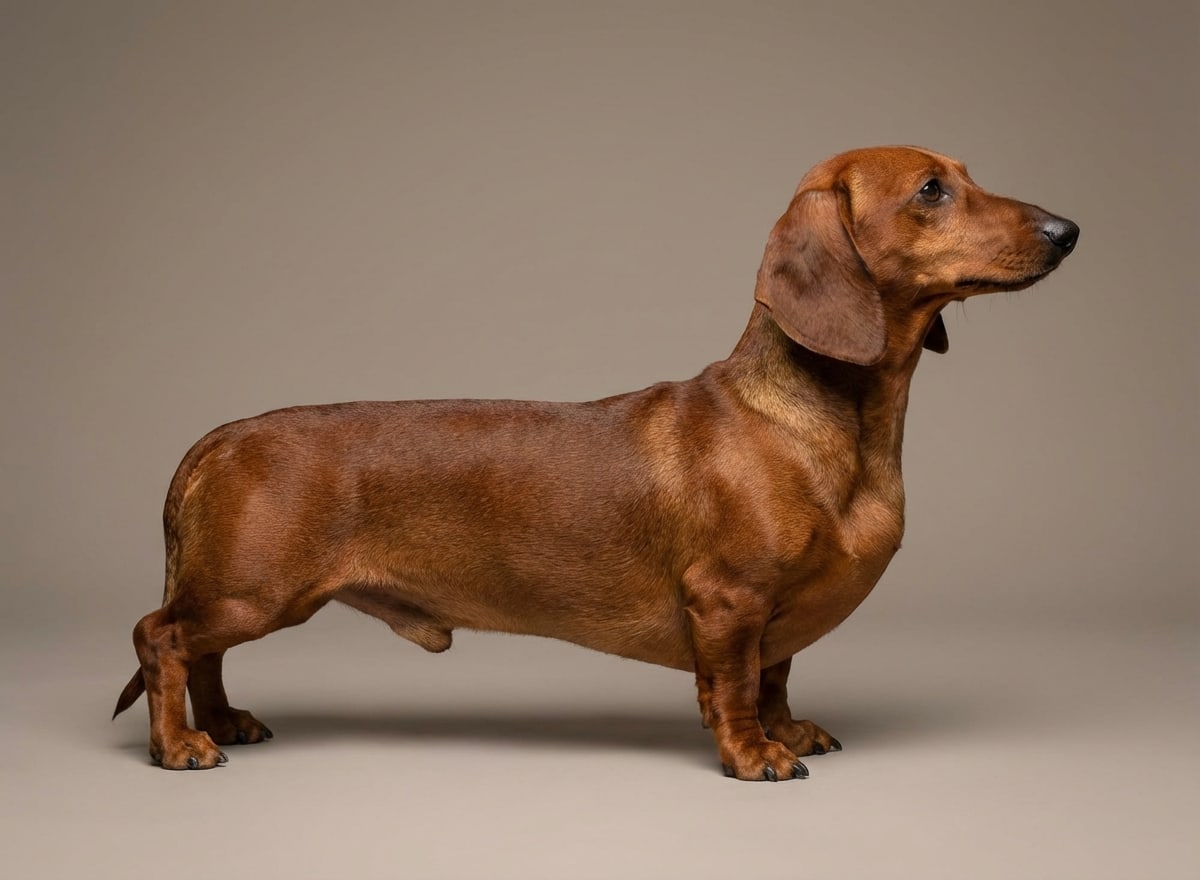
The Dachshund is a small dog known for being clever, lively, stubborn.
- Size
- small
- Weight
- 11–32 lbs
- Life span
- 12–16 yrs
- Coat
- smooth, longhaired or wirehaired
- Shedding
- moderate
- Energy
- moderate
Health to watch for
Common breed predispositions — not a diagnosis. Always consult your vet.
One in four Dachshunds will experience Intervertebral Disc Disease, a painful back condition that requires costly surgery and lifelong care. This stark reality underscores the importance of careful planning and preparation for prospective Dachshund owners.
Dachshunds are clever, lively, and devoted companions, but their stubborn nature and moderate energy level demand a thoughtful approach to exercise, training, and daily care. With their long, narrow bodies and short legs, Dachshunds are prone to spinal injury and obesity, making weight control and gentle exercise essential.
As a small breed with a big personality, Dachshunds thrive on attention, socialization, and mental stimulation, but their low grooming needs and adaptable nature make them a great fit for busy owners or those with limited space.
Temperament and Training
Dachshunds are known for their cleverness and stubbornness, making consistent, positive reinforcement training essential. Early socialization and housebreaking are crucial to developing good behavior and avoiding unwanted habits. With patience and persistence, Dachshunds can learn to obey commands and behave well in public.
Daily Care and Grooming
Dachshunds have low grooming needs, but their coats still require regular brushing and occasional bathing. Smooth-coated Dachshunds need the least maintenance, while longhaired and wirehaired varieties require more frequent grooming to prevent matting and tangling. Regular nail trimming, ear cleaning, and dental care are also essential to preventing health issues.
Exercise and Enrichment
Dachshunds have moderate energy levels and require regular exercise to stay happy and healthy. Daily walks, playtime, and mental stimulation can help prevent boredom, obesity, and destructive behavior. However, high-impact activities and jumping should be avoided to prevent spinal injury, making ramps and gentle play essential for this breed.
Feeding Considerations
Dachshunds are prone to obesity, making careful feeding and portion control essential. A balanced, nutrient-rich diet with regular weigh-ins and adjustments can help maintain a healthy weight and prevent related health issues. Owners should also monitor their Dachshund's food intake and avoid overfeeding, as this can exacerbate back problems and other health concerns.
Cost and Commitment
Dachshunds can live up to 16 years, making them a long-term commitment for owners. With their predisposition to costly health issues like IVDD and dental disease, prospective owners should factor in the potential expenses of surgery, medication, and ongoing care. Regular veterinary check-ups, preventative care, and a comfortable living situation can help ensure a happy, healthy life for this beloved breed.
Dachshund FAQ
How often should I exercise my Dachshund?
Dachshunds require regular exercise to stay happy and healthy, but high-impact activities should be avoided to prevent spinal injury. Aim for daily walks, playtime, and mental stimulation, and consider using ramps to help your Dachshund navigate stairs and jumps.
Why is weight control so important for Dachshunds?
Dachshunds are prone to obesity, which can exacerbate back problems and other health concerns. By monitoring food intake and ensuring regular exercise, owners can help maintain a healthy weight and prevent related issues.
Can Dachshunds be left alone during the day?
While Dachshunds are adaptable and can thrive in busy households, they do require attention and socialization. If left alone for extended periods, Dachshunds may become bored, anxious, or destructive, so it's essential to provide mental stimulation, exercise, and interaction throughout the day.
How often should I groom my Dachshund?
The frequency of grooming depends on the Dachshund's coat type. Smooth-coated Dachshunds require the least maintenance, while longhaired and wirehaired varieties need more frequent brushing and occasional bathing to prevent matting and tangling.
What are the most common health issues in Dachshunds?
Dachshunds are prone to several health issues, including Intervertebral Disc Disease, obesity, dental disease, and patellar luxation. Regular veterinary check-ups, preventative care, and a comfortable living situation can help identify and address these issues early on, ensuring a happy, healthy life for your Dachshund.
Top picks for Dachshunds
- Best Food for Dachshunds →
- Best Dental Chews for Dachshunds →
- Best Harnesses for Dachshunds →
- Best Treats for Dachshunds →
- Best Leashes for Dachshunds →
- Best Brushes for Dachshunds →
- Best Crates for Dachshunds →
- Best Collars for Dachshunds →
- Best Shampoo for Dachshunds →
- Best Nail Clippers for Dachshunds →
- Best Chew Toys for Dachshunds →
- Best Joint Supplements for Dachshunds →
- Best Beds for Dachshunds →
- Best Toys for Dachshunds →
- Best Ear Cleaners for Dachshunds →
- Best Jackets & Coats for Dachshunds →
- Best Cooling Mats for Dachshunds →
- Best Training Pads for Dachshunds →