Doberman Pinscher
The Doberman Pinscher is a large dog known for being loyal, fearless, alert.
- Size
- large
- Weight
- 60–100 lbs
- Life span
- 10–12 yrs
- Coat
- short single
- Shedding
- moderate
- Energy
- high
Health to watch for
Common breed predispositions — not a diagnosis. Always consult your vet.
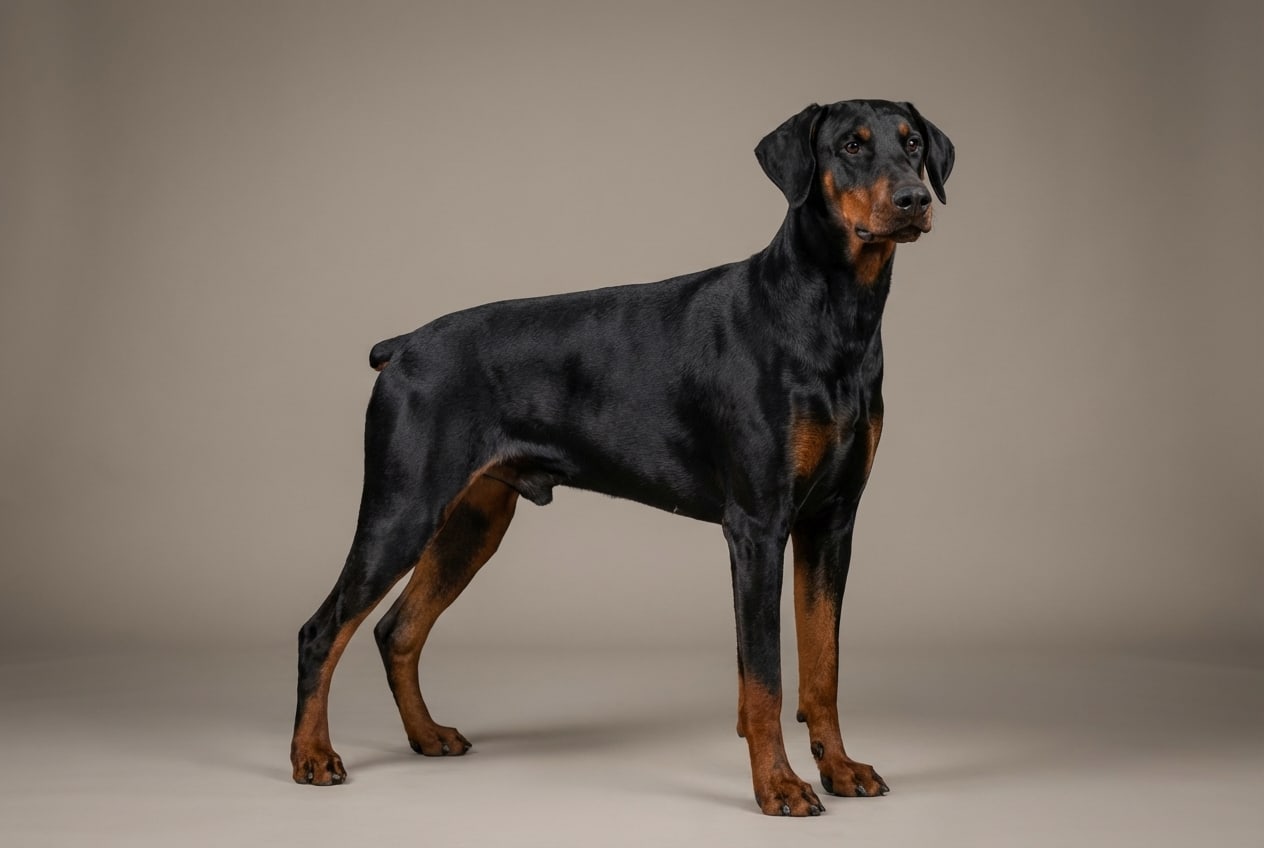
On a crisp winter morning, a Doberman Pinscher's lean physique can make them feel the cold more intensely than other breeds. As they pace around the house, their athletic build and high energy level demand regular exercise to prevent frustration and destructive behavior. Their short, single coat requires minimal grooming, but their loyal and intelligent nature means they thrive on attention and mental stimulation.
Despite their intimidating appearance, Doberman Pinschers are known for their loyal and affectionate temperament, making them a popular choice as both family pets and working dogs. However, their deep-chested build and thin coat also make them prone to certain health issues, such as bloat and heart problems.
As a Doberman Pinscher owner, it's essential to be aware of these potential health concerns and take steps to mitigate them, while also providing the necessary care and attention to support their physical and emotional well-being.
Temperament and Training
Doberman Pinschers are highly intelligent and responsive to training, but they can be strong-willed and independent. Consistent, positive reinforcement training is essential to develop good behavior and prevent unwanted habits. Early socialization is also crucial to help them become confident and calm in new situations.
Exercise and Enrichment
With their high energy level, Doberman Pinschers require regular, vigorous exercise to stay happy and healthy. Daily runs, walks, and playtime are essential, as well as providing mental stimulation through puzzle toys and interactive games. A lack of exercise and mental stimulation can lead to frustration, boredom, and destructive behavior.
Grooming and Coat Care
Despite their short, single coat, Doberman Pinschers still require regular grooming to maintain their overall health and appearance. Weekly brushing and occasional nail trimming and ear cleaning are necessary to prevent skin irritation and infections.
Feeding and Nutrition
As a large breed, Doberman Pinschers require a balanced diet that meets their nutritional needs, particularly during puppyhood and adolescence. They are prone to certain health issues, such as bloat and heart problems, so a high-quality dog food that is rich in nutrients and easy to digest is essential. Avoiding overfeeding and maintaining a healthy weight is also crucial to prevent obesity and related health problems.
Health and Wellness
Doberman Pinschers are prone to certain health issues, such as heart problems, bloat, and hip dysplasia, so regular veterinary check-ups and monitoring are essential to detect any potential health concerns early. Keeping them up-to-date on preventative care, such as vaccinations and parasite control, is also crucial to maintain their overall health and well-being.
Doberman Pinscher FAQ
How often should I exercise my Doberman Pinscher?
Doberman Pinschers require regular, vigorous exercise to stay happy and healthy. Aim for at least 30 minutes of exercise per day, including walks, runs, and playtime. However, be sure to tailor the exercise to your dog's individual needs and age, and avoid overexertion, especially in hot weather.
What kind of training is best for my Doberman Pinscher?
Doberman Pinschers respond well to positive reinforcement training, which focuses on rewarding good behavior rather than punishing bad behavior. Consistent, early socialization and training are essential to develop good behavior and prevent unwanted habits.
How can I prevent bloat in my Doberman Pinscher?
To prevent bloat, feed your Doberman Pinscher smaller, more frequent meals, and avoid exercising them immediately after eating. Elevating their food bowl and providing plenty of fresh water can also help reduce the risk of bloat. However, if you suspect your dog has bloat, seek veterinary attention immediately, as it can be a life-threatening condition.
Are Doberman Pinschers good with children?
Doberman Pinschers can make great family pets, but they can be strong-willed and independent. Early socialization and training are essential to ensure they are calm and confident around children. However, as with any breed, it's crucial to supervise interactions between dogs and children and teach children how to interact with dogs safely.
How long do Doberman Pinschers typically live?
Doberman Pinschers typically live between 10-12 years, but with proper care, nutrition, and regular veterinary check-ups, some have been known to live up to 15 years or more. Factors such as diet, exercise, and genetics can all impact an individual dog's lifespan.
Top picks for Doberman Pinschers
- Best Food for Doberman Pinschers →
- Best Dental Chews for Doberman Pinschers →
- Best Beds for Doberman Pinschers →
- Best Crates for Doberman Pinschers →
- Best Collars for Doberman Pinschers →
- Best Harnesses for Doberman Pinschers →
- Best Leashes for Doberman Pinschers →
- Best Toys for Doberman Pinschers →
- Best Treats for Doberman Pinschers →
- Best Shampoo for Doberman Pinschers →
- Best Nail Clippers for Doberman Pinschers →
- Best Training Pads for Doberman Pinschers →
- Best Brushes for Doberman Pinschers →
- Best Cooling Mats for Doberman Pinschers →
- Best Chew Toys for Doberman Pinschers →
- Best Joint Supplements for Doberman Pinschers →
- Best Jackets & Coats for Doberman Pinschers →
- Best Ear Cleaners for Doberman Pinschers →