Pug
The Pug is a small dog known for being charming, mischievous, loving.
- Size
- small
- Weight
- 14–18 lbs
- Life span
- 13–15 yrs
- Coat
- short double
- Shedding
- high
- Energy
- low
Health to watch for
Common breed predispositions — not a diagnosis. Always consult your vet.
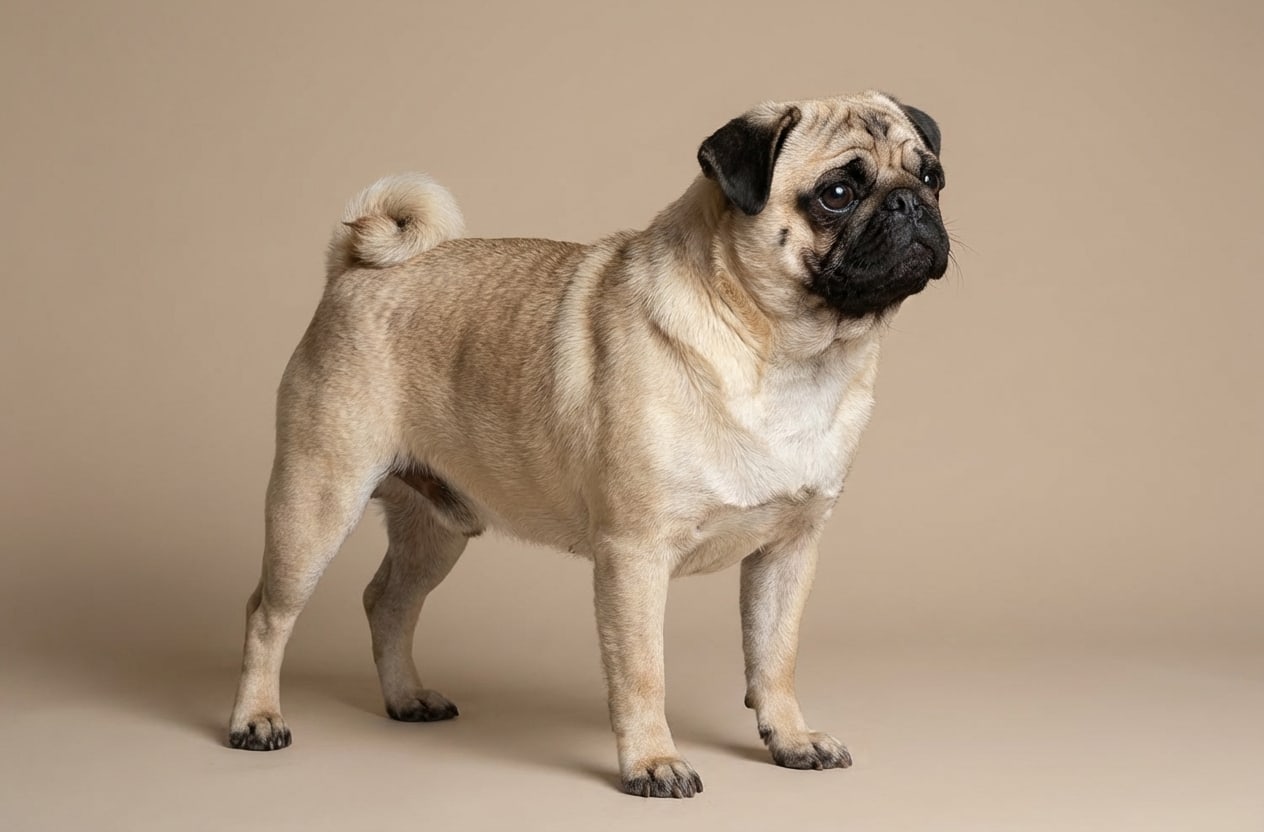
Pugs are brachycephalic, meaning they can struggle with breathing, especially in hot or humid environments. This unique characteristic requires special attention from owners to prevent heatstroke and respiratory distress.
Despite their small size, Pugs are surprisingly heavy shedders, and their short double coats require regular grooming to prevent matting and tangling. Their flat faces also need regular cleaning to prevent skin fold dermatitis.
With their charming, mischievous, and loving personalities, Pugs make wonderful companions for many families. However, their even-tempered nature can sometimes be mistaken for laziness, when in fact they need regular exercise and mental stimulation to stay happy and healthy.
Grooming Needs
Pugs have short double coats that shed heavily, requiring regular brushing to prevent matting and tangling. Their facial folds need daily cleaning to prevent skin fold dermatitis. A weekly grooming routine can help keep their coat and skin healthy. Regular nail trimming and ear cleaning are also essential to prevent infections.
Exercise and Enrichment
Pugs are low-energy dogs that require short, gentle exercise sessions to stay healthy. Daily walks and playtime can help keep them physically and mentally stimulated. However, they can be prone to obesity, so owners should monitor their food intake and ensure they get regular exercise. Mental stimulation is also crucial, and owners can provide puzzle toys and interactive games to keep their Pugs engaged.
Feeding Considerations
Pugs are prone to obesity, so owners should monitor their food intake and ensure they get regular exercise. A balanced diet that meets their nutritional needs is essential, and owners should avoid overfeeding or giving them table scraps. A high-quality dog food that is rich in protein and fiber can help keep them healthy and satisfied.
Health Considerations
Pugs are prone to several health issues, including brachycephalic airway syndrome, eye conditions, and skin fold dermatitis. Regular veterinary check-ups can help identify these issues early on, and owners should be aware of the signs and symptoms of these conditions. A healthy lifestyle, including regular exercise and a balanced diet, can help prevent or manage these conditions.
Cost and Commitment
Pugs require a significant investment of time, money, and effort. Owners should be prepared to spend money on regular grooming, veterinary care, and high-quality dog food. They also require regular exercise and mental stimulation, which can be time-consuming. However, for owners who are willing to make this commitment, Pugs can make wonderful and loving companions.
Pug FAQ
How often should I groom my Pug?
Pugs require regular grooming to prevent matting and tangling of their short double coats. A weekly grooming routine that includes brushing, nail trimming, and ear cleaning can help keep their coat and skin healthy.
Can Pugs tolerate hot weather?
No, Pugs are brachycephalic and can struggle with breathing in hot or humid environments. They require special attention and care in these conditions to prevent heatstroke and respiratory distress.
How much exercise does a Pug need?
Pugs are low-energy dogs that require short, gentle exercise sessions to stay healthy. Daily walks and playtime can help keep them physically and mentally stimulated, but they should not be overexerted.
What health issues are Pugs prone to?
Pugs are prone to several health issues, including brachycephalic airway syndrome, eye conditions, and skin fold dermatitis. Regular veterinary check-ups can help identify these issues early on, and owners should be aware of the signs and symptoms of these conditions.
How long do Pugs typically live?
Pugs typically live between 13-15 years, but with proper care and attention, they can live a long and healthy life. Regular veterinary check-ups, a balanced diet, and regular exercise can all contribute to a healthy and happy Pug.
Top picks for Pugs
- Best Treats for Pugs →
- Best Crates for Pugs →
- Best Food for Pugs →
- Best Beds for Pugs →
- Best Dental Chews for Pugs →
- Best Leashes for Pugs →
- Best Harnesses for Pugs →
- Best Toys for Pugs →
- Best Brushes for Pugs →
- Best Collars for Pugs →
- Best Nail Clippers for Pugs →
- Best Shampoo for Pugs →
- Best Jackets & Coats for Pugs →
- Best Chew Toys for Pugs →
- Best Joint Supplements for Pugs →
- Best Cooling Mats for Pugs →
- Best Ear Cleaners for Pugs →
- Best Training Pads for Pugs →